
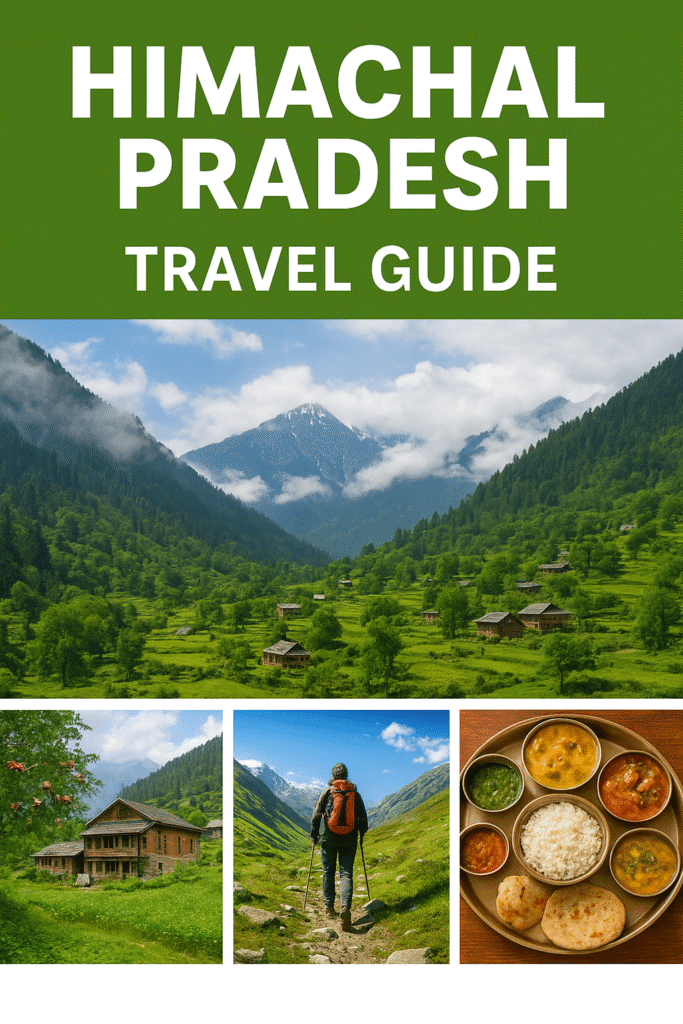
1. An Overview of Himachal Pradesh: Its Wonderful Charms
Upon hearing the term “Himachal Pradesh,” people usually picture a snow-covered Manali or the bustling streets of Shimla. However, that is just the beginning. Himachal has much more to offer than tourists and beautiful villages. The real charm lies in the tranquil valleys, the centuries-old traditions, and the kinds of landscapes that make you stop and look. It’s about slowing down and breathing deeply. Also letting the mountains change the beat of your life.It’s not just about leaving the city behind.
2. The Charm of Small Villages in Himanchal
If you really want to see Himachal, go where the buses don’t. Villages like Tirthan, Jibhi, and Kalga look like something out of an old storybook—apple orchards, wooden homes with smoke curling out of chimneys, and streams that sound like music at night. The people are warm; a smile or a “namaste” is common. Sometimes, locals even invite travelers inside for tea. Spending a night in these villages makes you realize how peaceful life can be when it’s simple
3. Thrill-seeking adventure in Himanchal
Pure adrenaline lies on the opposite side of Himachal’s serene face. Treks like Triund, Hampta Pass, and Pin Parvati Valley give you some of the most breathtaking views you’ll ever see. If trekking isn’t your thing, you can raft through the Beas in Kullu, fly high while paragliding in Bir Billing, or try skiing in Solang Valley. Each adventure is a little tough but that’s the beauty of it—you earn the experience, and it stays with you forever.
4. Spiritual Side of the Himachal Mountains
Himachal is also called Dev Bhoomi, the land of gods. You’ll feel that energy when you step into a monastery in Dharamshala or Spiti, or when you visit the centuries-old temples of Chamba and Kangra. Sit quietly while monks chant, or light a small diya at sunset—the stillness seeps into you. Although the religious aspect of the landscape is subtle and peaceful, it has the power to calm you.
5. Himachali Food: An Overview of History
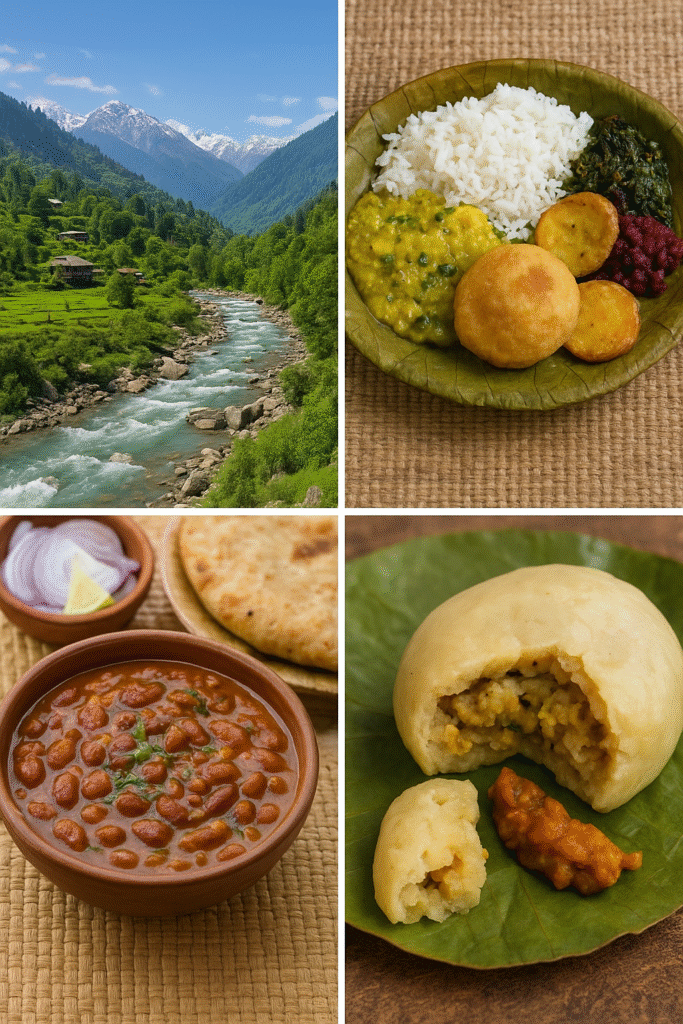
The history of Himachal’s food is distinctive. The dham, a customary meal presented on leaf plates, is not to be missed. Try the well-known Chamba rajma, which is cooked slowly with spices, or siddu, which is a soft steamed bread filled with contents. Nothing compares to enjoying homemade chutneys that taste like plums or apricots while sipping hot tea in the cool mountain air. The best comfort meal is Himachali cuisine, which makes you feel at home even when you’re far away.
6. Offbeat Himachal Destinations Worth Visiting
If crowds aren’t your thing, Himachal won’t disappoint. Spiti Valley looks like another planet—barren, stark, yet breathtakingly beautiful. Chitkul, the last Indian village near the Indo-Tibetan border, feels like it’s been frozen in time with its wooden houses and snowy backdrop. Then there’s Kheerganga, where walking leads to a plunge in mountain-surrounded natural hot springs as a treat.These offbeat destinations give you raw, unfiltered Himachal.
7. Best Time to Visit Himachal
Himachal changes its face with every season. The summer months of April through June are all about trekking and verdant slopes. Although rain also brings landslides, the monsoon season (July to September) makes everything appear lush. In towns like Manali and Kufri, winter (October–February) is enchanted by the snow. There’s no single “best time to visit Himachal.” It depends on what you’re looking for—pleasant hikes, snowy adventures, or quiet escapes.
8. Conclusion: Why Himachal Is More Than Just a Trip
More Than Just a TripEnjoying a dish of momos in McLeodganj on a chilly evening, listening to the sound of rivers flowing in Tirthan, or gazing up at the night sky in Spiti—it’s all about the little things. Himachal surprises you with moments rather than just memories. And once you return, you’ll realise that it’s more than just a vacation—it’s an eye opener of how beautiful life can be when you spend your time.
The goal of a vacation to Himachal is not to cross off as many destinations as possible.